
Piece by Jason Davis (Forbes Contributor) featuring Movement's CEO/Co-founder, Jason Mitchell.
The creator economy is not a trend. It is the reorganization of media, culture and commerce around human trust at digital scale. The companies that build the infrastructure for that reorganization will be the defining media businesses of the next generation.
The old gatekeepers are losing their grip. The new power brokers aren't in corner offices on Wilshire Boulevard — they're building integrated ecosystems where audience, authenticity, and commerce collapse into one.
There is a structural rupture happening in real time that most of the entertainment and marketing industries are still struggling to name. Hollywood is contracting. Traditional advertising is losing its audience. Attention — the only truly finite resource in the digital age — has migrated to a new class of media owner: the creator. And yet, despite overwhelming evidence of where culture is being made, brands and studios alike continue to operate as though the old rules still apply.
They don't. And the companies that understand what comes next — the ones building platforms that fuse social strategy, brand marketing, and talent management into a single integrated machine — will be the defining media businesses of the next decade. The question is no longer whether the convergence will happen. It is who will build it, and how fast.
A $200 Billion Market That's Just Getting Started
The numbers alone are staggering. The global creator economy reached $205 billion in 2024 and is projected to hit $1.35 trillion by 2033, growing at a compound annual growth rate of 23.3%. That is not a niche. That is a category reorganization of the entire media and marketing landscape.
The influencer marketing segment specifically has grown from a $1.7 billion industry in 2015 to a projected $32.55 billion powerhouse by 2025 — nearly a twenty-fold expansion in a single decade. The global influencer marketing industry reached $32.55 billion in 2025, with 80% of brands maintaining or increasing their budgets.
But market size only tells part of the story. What the data reveals — and what the smartest operators in the space have already internalized — is that this is not simply an advertising trend. It is a structural shift in who controls distribution, narrative, and trust.
Brands earn an average of $5.78 for every dollar spent on influencer marketing, with top-performing campaigns achieving up to $18 to $20 per dollar invested — outperforming traditional digital advertising by a factor of 11. Consumer trust has shifted decisively: 69% of consumers now trust influencer recommendations over direct brand messaging, with 86% making influencer-inspired purchases at least once per year.
The economics have spoken. What hasn't caught up is the infrastructure.
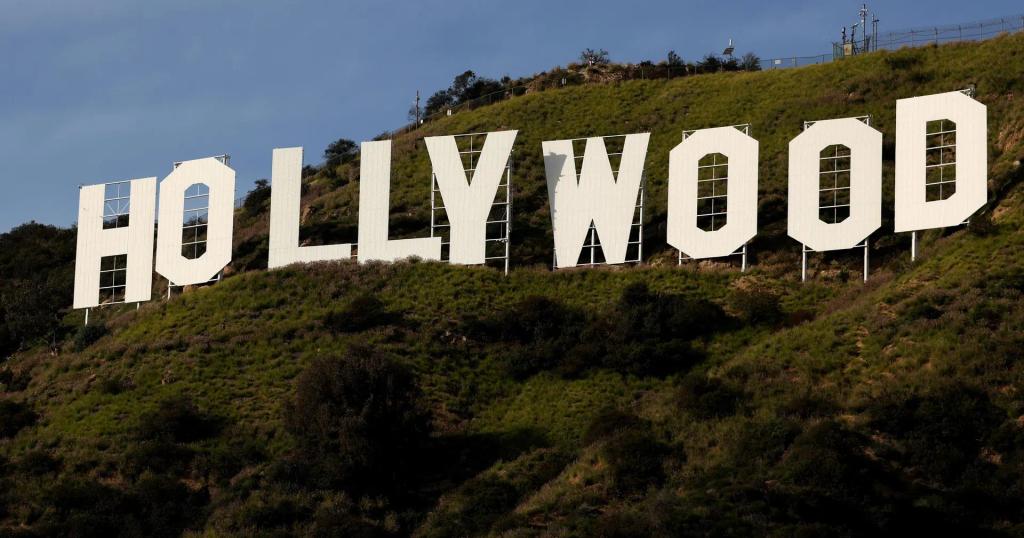
Hollywood's Slow-Motion Crisis
To understand where the creator economy is going, you have to understand what it is replacing.
The major studio theatrical business is no longer a reliable growth engine. Beneath occasional billion-dollar franchise successes lies a shrinking marketplace, fewer wide releases, and an exodus of mid-budget films with nowhere to land. For producers, distributors, and creators, the consequences are real: more risk, fewer buyers, compressed windows, and licensing terms that increasingly favor streamers over theaters.
From 1995 to 2009, Hollywood's major studios averaged roughly 112 theatrical releases per year. Between 2010 and 2023, that number dropped to around 83 — a decline accelerated by consolidation. Domestic ticket sales finished 2024 at $8.7 billion — down 23.5% from 2019's $11.3 billion, the last normal year at the box office. Looking at raw ticket sales, which takes rising prices out of the equation, the picture is more dire: compared to 2019, ticket sales are down almost 40%, and the decline in ticket sales began long before the pandemic.
The streaming experiment that was supposed to save Hollywood has, in many ways, accelerated the dysfunction. Even as total global content spend reaches a projected $248 billion in 2025, growth has nearly flat-lined to just 0.4% over 2024 — not a rebound, but a stall.
Tech giants brought Silicon Valley's "move fast, break things" mindset, transforming entertainment from a premium standalone product into a value-added feature for subscription models. Traditional studios poured billions into competing streaming services, accumulating debt and dismantling proven distribution strategies in the process.
The U.S. film and television industry is experiencing its most significant period of disruption since the decline of the Studio System in the 1950s. Audiences are increasingly turning to alternative forms of entertainment — gaming, social media, and short-form user-generated video content — and the traditional pillars of Hollywood are crumbling.
What audiences are doing instead of going to the movies or consuming prestige television is watching creators. And crucially, they are trusting those creators in a way they no longer trust studios, networks, or traditional celebrities whose personal brands can feel managed, manicured and at times in-authentic.
The Three Pillars Nobody Is Unifying
Here is the central paradox of the current moment: the creator economy has produced extraordinary individual talent, and the brand marketing world has produced sophisticated demand for that talent. But the connective tissue — the strategic layer that turns a creator into a brand partner into a media franchise — has remained fractured.
Social strategy, brand marketing, and talent management have operated as separate disciplines, served by separate firms, with separate agendas. Brands hire social agencies for content strategy. They hire influencer marketers for campaign execution. They hire talent agencies or managers to access specific creators. But nobody owns the end-to-end relationship in a way that creates durable value for all three parties simultaneously.
The cost of this fragmentation is not merely operational inefficiency — it is strategic value left permanently on the table. When a brand's social agency doesn't know the creator's audience architecture, and the creator's manager doesn't know the brand's long-term equity goals, the resulting campaign is optimized for metrics that matter to none of them: impressions that don't convert, content that doesn't compound, and partnerships that don't renew.
Jason Mitchell, CEO of Movement Strategy, has built an entire operating philosophy around closing this gap. "Brands that are winning today understand that interrupting consumers with heavily produced TV spots is no longer the way to build a brand or attract customers," Mitchell says. "People have figured out every way to block advertising. But that doesn't mean people don't like discovering new products — supporting and talking about brands they love." The thesis is not merely tactical. It is architectural: social intelligence must be embedded in brand strategy from inception, not bolted on at the end as a media buy.
When creators are integrated into brand strategy from the beginning — educating audiences about why a category matters rather than simply selling a product — the results move from advertising outcomes to cultural ones. The difference between a 0.5% product-mention benchmark and 20.5% is not a media spend difference. It is a structural integration difference.
Continue reading the feature here.
Featured Image: Luke Hales/Getty Images